
Connect with Madison:
@madison_mcghee on Instagram
Listen to Ice Cold Case
Listen to Frozen Files
Support the Podcast
If you enjoy Case Uncovered, please consider leaving a five-star rating and review. It helps the podcast reach more listeners and bring awareness to these cases
Case Uncovered is a part of the non-profit The Reignited Project. I founded The Reignited Project, a 501(c)(3) dedicated to supporting families of the missing and murdered through advocacy, education, and resources. After walking through a missing persons case within my own family, that mission became even more personal. We are now developing the Linda Brown Advocacy Protocol, a trauma-informed initiative designed to help families navigate the early stages of a missing persons case with clarity and support.
Learn more: www.thereignitedproject.com
Support the show: https://buymeacoffee.com/jenriverainvestigates
Connect with me on social:
Instagram: @jenriverainvestigaties
Facebook: Jen Rivera Investigates
YouTube: @jenriverainvestigates
Visit my website: jenriverainvestigates.com
Case Uncovered is a Reignited Media & Fire Eyes Media Production hosted & Produced by Jen Rivera.
Become a supporter of this podcast: https://www.spreaker.com/podcast/case-uncovered--6440550/support.
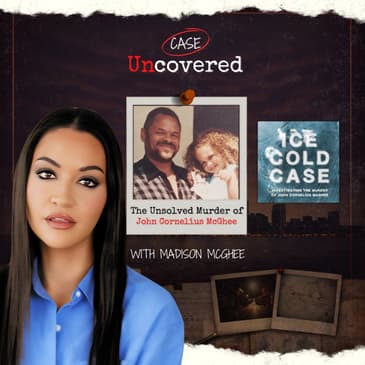
Hey, everyone, and welcome back to Case Uncovered, where we uncover some of the most compelling and lesser known true crime cases. I'm your host, John Rivera. Today's episode is a little different and one that I feel incredibly honored to bring to you because this isn't just a case we're talking about. This is a daughter's story, a daughter who has spent years searching for answers after her father was brutally murdered, and to this day, his case remains unsolved. And while you've heard me bring you these stories through deep dives and investigative storytelling, I'm also excited to be in sharing more conversations like this, bringing voices directly to you, not just families, but also professionals in the space, investigators, advocates, and experts who can offer deeper insight, perspective, and understanding into these cases and the realities behind them. Joining me today is Madison McGee, host of the podcasts Ice, Cold Case and Frozen Files. But beyond her work in true crime, Madison is an advocate, a storyteller, and someone who has turned unimaginable loss into purpose. In this conversation, we talk about her father's case, the complexities the unanswered questions and the reality of what it's like to grow up in the shadow of an unsolved murder. We also dive into her journey how she channeled her grief into action, created ice cold case, and built a platform that's not only raising awareness but actively pushing for answers. This episode is raw, it's honest, and it's a reminder that behind every case we cover there are real people, real families, and real lives forever changed. So with that, i'd like to officially welcome Madison McGee to Case Uncovered. All Right, well, thank you so much Madison for joining me for this episode of Case Uncovered. I'm so honored to have you on the podcast. Yeah, I'm so I'm excited to have you here. So today we're going to talk about Madison's dad and his case, because it's still considered a cold case at this point, right, Yeah. Which is kind of interesting because like cold case means there's no new leads, and like, I feel like I've uncovered a ton of leads, which we'll get into, but yeah, it's still classified as a cold case out of Ohio. That's it's crazy. It's crazy to be just even from my experience like being on the advocate side, but then being on the family side and actually having you know, this be your family member and your dad. If you can tell us a little bit about how you got into investigating your dad's case, a little bit about yourself, because my listeners may not be familiar or they may be familiar with who you are, I'm sure, but share a little bit about who you are, and then kind of how you got into investigating your dad's murder. Yeah, for sure. I mean on paper, like pretty like regular weirdo. I'm like a creative person. Was not in this world whatsoever kind of prior to this. So yeah, people probably don't know me, at least from a true crime perspective. I grew up in Charleston, West Virginia, and yeah, just like a pretty standard like creative mind, always making like videos, Like I remember watching like the very first YouTube video that ever came out in like whatever two thousand and five or tw thousand and six, and like being like what is this? Like I want to do this, and that sort of transitioned into more of like a desire to do like filmmaking and make TV shows, and so that was always the dream and the goal for me. And then when I was six, my dad died, but I was told that he had a heart attack and passed away. When I was sixteen, I was about to graduate high school go to college, probably in my mind, pursues some sort of creative medium like filmmaking or producing. And I was about three weeks away from graduating high school when I found out that my dad was actually murdered. He didn't have a heart attack, And it was mostly because my family didn't want me to know something so dark at such a young age. But after a while, it started to feel like, oh, as I was looking back, like it was less about me not knowing because I was young, and maybe more about me not knowing because there's like all these secrets sort of buried underneath the surface. And so. I processed that as best as I could at the time. And then I went to college like right away, I mean like within a few months. And so I'm in college, I'm interested in doing movie making and all of that kind of stuff. And after several years of studying that, moving to different cities, being in big cities working on productions, really getting a knack for storytelling, I kept coming back to the fact that like I had this story I was sitting on and like nothing was happening with it, and so I took the opportunity when we were all stuck at home during the pandemic, to look into my dad's case. Now, the details from there get very juicy if you're an outsider, and very complicated if you're on the inside of the story. But it was Memorial Day of twenty twenty, which is also the same day that George Floyd was murdered. Very weird day to call a police department and ask about a black man who got murdered in their town. But alas, I didn't know that that was going to happen that day. So in the morning, I make this phone call and by the afternoon, like the whole world is sort of ignited around black lives matter, and it was a very interesting kind of time. So now, in an already sort of police relations are complicated way even more so now because now I'm calling about this black man in a predominantly white county who got murdered twenty years ago, and the case is unsolved, and it's like, why is she calling us? So I remember even like feeling these complicated feelings of like people are like burning down police departments right now, but they can't burn down that police department because that's where all my dad's case files are. So having this very conflicting thing of like police are bad, they're doing these bad things, but I need them and I need their help, and like it was a very as a family member, you really do ride this very weird line of like they've done me a disservice by leaving my family member's case unsolved, but I also need their help, like I can't do I can't make an arrest on my own. So it's a very kind of I had never felt this conflicting feeling before, and so that sort of started a very long journey just to get the police files. They were avoiding me to every corner, really not responsive. I finally got access to the case files, and that's when I learned a little bit more about what happened to my dad, Because at this point, I'm like, I know my dad was shot and killed, and I know it's unsolved, and other than that, I don't really have a lot of details. So me reading the case file was really the first time I was learning a lot about what was going on, and that then sent me down a very wild journey. I spent about three years investigating the case without doing anything, just like looking into it, talking to people, interviewing people, and then in twenty twenty three, I put out the first episode of my podcast, Ice Cold Case, which was investigating the murder of John Cornelius McGee, who was also my dad, and that kind of took the genre by storm in a way that I wasn't expecting, mostly because I don't think anyone like me has ever really existed in this platform before. I am a dag are obviously investigating my dad's murder, so that's unique. But I'm also pretty dynamic. I work in comedy, I produce TV shows. I'm not like your picture perfect, like I'm not crying on the internet all the time about this thing that happened to me. I'm like funny and I make jokes and I'm like kind of a weird person to be doing this work because people are like not it. They're not used to that. But I think that worked in my favor because it invited people in in a bit more of like a casual wab. The show is very serious, but like any interview I would do or anytime I would talk about it with someone. It was not like like I'd be in an elevator with someone and they'd be like, oh, you have a true crime podcast, but yeah, a true grind podcast, and they're like, what's it about. I'm like, oh, my dad got murdered and they're like, oh oh, and it's like no, no, no, it's fine. And so I was able to like invite people into the world in a bit more of a casual way just because of like the personality I had built up over my whole life, and I think that charisma or whatever or really attracted people from an industry perspective, but also listeners. And the show grew really without any backing. I mean, I put I paid for everything. I put up my own money to promote it, make it do it. So on paper, it should not have gotten the audience that it did, just because I didn't have like a network or anything helping me. But it did. And then because of that, because of listeners listening, more people listened, and it made its way into the prison system, and the people who I thought were kind of connected to my dad's murder were like listening to this podcast in prison, which is very funny and that opened up this new side of the podcast where it left being just me trying to tell my dad's story and sort of be like this is unfair and this isn't right and the police should be doing something, don't you agree, And it more so became like do you have any info? And people started reaching out with like I know this person or I am this person. You talk about me on your podcast, and it was just like this crazy, crazy time. So the podcast became sort of an investigative tool. And then, of course, after years and years of that, the police finally were like, oh, We've assigned a new detective to the case who I've only spoken to once, so it's not like he's really doing anything. But yeah, now it's sort of at a standstill. I'm waiting on them to do stuff. I'm still sort of silently looking into it and asking questions and trying to get in touch with people. But yeah, it took on kind of a weird life of its own, and at the root of it, it's like, my dad is still dead, it's an unsolved case. There's a townful of people who I think know what happened, but there's a lot of layers to it. My dad was a drug dealer turned confidential informant, which any listener right now is sort of like, oh, I'm a little less mad he got murdered, and that's not your fault for thinking that. It's a natural thing that we all do where we go, oh, well, it makes a little sense, right, And I think that's wrong, but we do it, and like, how do we not do that anymore? And so I'm sort of on this like grander mission now of like how do I recorrect the narrative for my dad and for other people, but mostly my dad, just because that's the case I've been working on and I'm so connected to. But I would love to solve it. We'll see what happens. I'm not giving up, but it is a layered story that you'll have to listen to on my. Bad absolutely well. And you know it's crazy too, because I cover a lot of cases as well, and I talk to a lot of families who have missing loved ones or unsolved cases. And some of them may be a sex worker, or they may be involved in things that not everyone agrees with or you know, but at the end of the date, these are still people who have families who are loved and who deserve answers? Uh, no one starts to a person right like. No one deserves to be murdered, no matter like period, full stop. That's the end of a sentence. It's why I'm very against the death penalty. I feel like what we don't seem to understand a how expensive it is to kill people. But also there the reality is death doesn't even really harm the dead. It's like all of the people left behind that have to deal with, like the grief and the unanswered questions and the not knowing or the closure that doesn't get to happen. And I feel like that is the true pain of like murder, and we don't seem to understand that, like someone's transgressions leading to their murder doesn't really impact them anymore. They're dead, is dead. My dad can no longer feel pain, he can no longer make bad decisions, quote unquote. I'm left behind. My sister who was in the house is still alive and every day has to live with like those memories and seeing our dad on the floor and remembering the nine one one call and all of these things. And it's like the person who killed my dad did more harm to my sister than to my dad, even though he's the victim technically, who's like laying dead on the floor. You don't realize sort of the repercussions my sister's kids who have to live with, like the PTSD that my sister has, or what my potential children who have to live with what I've been through. It's like there's just such a long lineage of like pain that passes down when someone gets murdered or goes missing, or there's unanswered questions behind any sort of crime like this, that like it doesn't matter if they were a bad person or did bad things. No one deserves to meet their in that way. No one deserves to die at the hands of someone else, Like I remember, because I process my dad's death for the first ten years as if he had a heart attack, because that's what I was told. So in my mind, I know what it's like to lose a parent to a heart attack, and I also know what it's like to lose a parent to murder, because I've experienced weirdly both, which is kind of an interesting thing. And I will say, as heartbreaking as it is, like cancer, heart attacks, any sort of health issue bring aneurysms. I just lost a friend to cancer, but he actually died because he went into septic shocks. So it's like, you know, a whole other slew of we weren't expecting that to happen type of thing. And it's like, but you can justify it in your mind because you can connect the dots. You go, oh, he was in the hospital with a broken down immune system, so he got septic and that sometimes happens to people, Like that's science, Like I can connect those dots in my head when you think about like someone made a decision to like spot my dad in the head. It's such a weird way to be, like he died at the hands of someone else. I don't know. It's just such a weirder way to like process because you're like, could that have been avoided? Why did this happen? You go through all the same questions but in a very different way, and yeah, it just like is so weird. You're in a very weird club of people who have lost someone to like murder, gun violence, whatever. It's all just so weird. And yeah, I just I just remember now maybe it's because of this, like I process health issues in a very different way. It was almost like when I found out my dad was murdered, I was like, God, I wish he had a heart attack, Like it was like this weird, like I wish that was that was the story and not this. And yeah, it's just very hard to process. Yeah, well, and then you go through a cycle depending on how long that case goes unsolved without answers. You go through that cycle continuously, so you're always asking those questions, yeah, every day. So I mean, if you could talk a little bit about that, because transitioning. So, Yeah, your situation is very unique because, like you said, you started off thinking your dad died a certain way where you had you had answers, you had closure, Okay, this is how he died, and then you learn that he was actually murdered. Now, in terms of the feelings about that, and like the dynamic, there was anyone like your mom or anyone in your family at the time. Were they pushing for answers, were they working with the police department at that time, or was it just kind of at a standstill. It's hard to say. My grandmother, love her to death. She is a very passive person and she was old. In my mind, you know, and like you think of your grandparent like they've always been old. My grandmother was never twenty five. She's an old lady and has always been an old lady. So she was younger at this time. This was twenty eight plus years ago, but in my mind, I was like, she was just an old lady. What was she going to do? Call the police? She probably could have, she didn't. Of course. She's a very passive person, and I do think a lot of her energy and time was spent making sure I never found out, Like I really do believe she was like constantly trying to protect me in that way. My mom at the time was getting high. So my mom's a drug addict. She's been clean for six years. Were all very proud of her, but at the time she had relapsed, so she was like kind of a mess. And I'm sure this didn't help. Like that my dad was killed, so I'm sure that was like putting her into a spiral. But according to her, she was still sort of in between those moments, calling the police to be like, is there an update, what's going on. My parents weren't together at the time, so my mom wasn't even in the same state as my dad, but she was saying that she was like calling every now and then, and I believe her. My mom is a bit of a like through crime person, like she loved like I grew up watching like America's Most Wanted at an age I should not have been watching America's Most Wanted, and so my mom was really obsessed with like the Oxygen shows, Cold Case Files and all of that stuff. So I could see my mom like having these like bits of energy in between like relapsing where she's like, I should call and do something about this, like I'm sure that's where partially where I get this from. And then it would like die down, and you know, she'd go through her own things, but she said she was calling. And at one point I interviewed my mom for the podcast, and she talks about how at one point she calls the police and they're like, well, we know who did it. We're just like we're waiting to be able to arrest them, and like that always stuck out to her. At one point I think they told her that like they were in prison for something else. But yeah, so it's just kind of this weird Everyone was getting different stories at different times in the timeline. And so after a while, I think my mom kind of gave up asking questions and that, and once I found out, I think she felt like the mantle will sort of pass on to me, which fair enough. But yeah, I don't know if anyone was really doing anything. I know my family on my dad's side says they were calling the police. There's two sides every story. The police are saying that, like my family was basically just calling and like hounding them, being like you're about at your job, you're not doing anything, and like going on radio shows kind of criticizing them and not actually trying to like get anything from them or ask any questions. I'm sure there's two sides to that. But the family is saying like, oh, we were trying to get answers. But who knows the truth. I mean, it's all so muddled and everyone has a weird motive. It almost feels like a knives out movie, Like my dad didn't really leave anything behind in that way, but it's like we're all here, we all have different pieces of information, and nobody's sharing what they really know, Like what's who knows what and what's going on here? It's very interesting. Yeah, that's that's insane. So when you found out, what were your initial feelings and like how did you decide and make that decision, Like Okay, I'm gonna start investigating this because I'm sure there was kind of a shock factor that happened at first, like oh my god. I had a long period of time in between. Actually, so it was it was like seven years before I even did anything. So I was sixteen when I found out, and I was twenty three twenty four when I finally like called to get the case files. And in between there I would kind of like reach out to a family member on Facebook or do something kind of small but nothing crazy. But yeah, when I first found out, I mean I was still pretty young. I was sixteen, I was about to graduate high school. I remember feeling very like disconnected from like reality in a way where it was like this thing that I'd thought my whole life, replaying common conversations I had had with friends who had either like lost a parent to a heart attack or like their parent had a heart attack and was recovering, being like, oh, I know what you're going through, like I'm here for you, and then like replaying those conversations, going oh my god, I'm a liar, Like I don't know what I'm talking about. It's just like really weird. It was very weird. And then you kind of go like how many people knew about this? And I didn't know. It's like it's am I the last person to believe? In Santa claus In school type feeling where you're like, do I look crazy? Like going around telling people my dad had a heart attack and everyone's read the newspaper articles that like my dad was murdered. Like it was just like a very weird thing, Truman Show esque, like I replayed my whole life going like, oh my god, am I living in this like weird simulation where like I'm the punchline And so that was like a weird thing to process. I did not trust people for a very long time. The depression and anxiety manifested actually years and years later when I was in college and I had like a full psychotic break, like not in a crazy way, but like I was, I'm a pretty neat organized person. And I lived in my sorority house and my bed was on the second bunk, and my clothes started piling up to like the basically where my bed was, and all my roommates were like, this is crazy, like what are you doing? And I'm like I don't know, Like I can't not like I can't do anything. I can't pull my clothes away, I can't like organize my life. Like I was like skipping class because I like would walk to class and like not go and I couldn't understand what was going on to me. But I think it was like sort of a delayed ramification of like what was what had happened to me? And so yeah, like my junior year of college was like actually truly a nightmare. I can't believe I graduated college, but it was just like so wild. And now looking back, I'm like, oh, it's so obvious what was going on, but I just did couldn't place it because I didn't know. I wasn't in therapy, Like I didn't know what was happening to me. But it took a long time to really process. And yeah, then when I was twenty three, twenty four, I started looking into this and then now I'm thirty, which is crazy. So it's been a journey. And once you started looking into the case files and started investigating and talking to people, what was your experience there because I have a lot of families that I work with two that do try to investigate the cases for their family member, their loved one, whoever it is, or a missing person's case. But most of the time, well yeah, most of the time, we'll say, because I don't know many people that actually end up doing podcasts, it's very rare that they'll have the experience, or they'll be like, I'm just gonna I'm going to run with this. I'm going to do a podcast. I want answers. So what was that experience, Like, I'm just I'm curious to know how that went for you. What was it like, what was like talking to some of these people, especially knowing I'm sure as you're having more and more conversations that more information is being released where you're like, wait a minute, this person I've talked to this person, or maybe this person knows more than they're saying, or you know, there's conflicting stories and they're like, wait, this is just insane, Like what's happening. No, you're spot on. It's so funny. It's like exactly my experience. The first person I ever talked to in person, I drove forty one hours to get to Ohio because it was during the pandemic, and I didn't want to fly because my grandma. I don't want to get my grandma's sick. But I showed up to the Beaumont County Sheriff's Department. They were the first people I talked to. So I get this like two and a half hours with detective of All who happened to be there on the scene at my dad's house that morning and still works there. He's like one of the only people that still works there that was there that day. So I'm talking to him, and I remember listening back to his interview. It is kind of funny. You can tell he's like kind of being cavalier and covering up his tracks a little bit. But I remember leaving going, God, what a nice guy. Seemed like he was like really open and honest with me, and like he've really laid it out. Isn't that so great? Okay, this will be easy, Like he was so great. The next day, I talked to my family member, my aunt. I interviewed her and we talked for hours and hours and hours, and I left going, oh late, of in it, somebody is not telling me the truth because these two stories are completely different, And it was very funny to be like, oh, I'm gonna believe everyone I'm talking to in that moment because they're all so convincing, and I'm gonna leave every interview going Okay, well, then that must be the thing that happened. So then it's like a matter of putting it all together to kind of find the overlap. Okay, this detail is the same as this detail is the same as this detail, so that detail must be true. Okay, and this detail is kind of similar to this detail, but they're different in this way, so like what's the actual thing, and like really trying to piece it together like that. But I mean, in the beginning, I'm like, oh no, I'm gonna believe everybody whoever I talked to last like that's the story in my mind. And so it was very hard. So I had to really force myself to honestly not even kind of put together anything in my head until I had a ton of stuff. So I just was like asking almost the same questions to everybody, and like doing these interviews and talking to people and trying not to even form an opinion for like a year and a half, so that I could gather as much info as possible. Before it was like, Okay, now I'll start piecing this all together, because I would have been like, oh, yeah, this is what happened, and then I'd talked to someone else and be like, oh, I guess, well, then this is what actually happened. Oh well then no, this is what actually happened. And I would have just done that for two years. So I just talked to as many people as possible. But it was weird because like I'm talking to like cherfs, I'm talking to prosecutors, I'm talking to family members, some who I've not seen since I was like five years old, and some I've never met before. So I'm like meeting these people for the first time, Like, Hi, nice to meet you. Were related anyways? Who killed my dad? And it's like this very weird family reunion that's not a reunion at all, and like they're wearing a mic and like it's like this is a very it's a weird situation to put someone in and yeah, and then you know, more and more reveals itself as it became public. I think a lot of people thought I wasn't going to do anything. I really do genuinely think more people were really open with me in the beginning because they were like, she's not going to make anything. There's a really powerful quote from Detective of all when I'm sitting with him and he knows I'm recording. I mean, at one point I was like, my phone's in a cup recording him, and the cup fell over and he put it back up, so it's like, you know, I'm recording, Like there's a microphone on on my phone. And at one point he was like, oh, I was like, can I record and he goes, yeah, yeah, I mean my body cams on. So I was like, okay, we're all joking around here, like you know, you know that I'm recording you. And then at one point, I think about an hour and a half in because people forget that they're being recorded, he's like, well, it's not like you're making a Netflix documentary or anything. And I was like, yeah, I don't even know what this is, Like I don't know, but I am recording you. You do know I'm recording, right, So it's just funny that he like kind of said that, and I think he was like, you're not making a podcast or anything, and it's like ironically, yes, I am, but it was just like funny. I think a lot of like my family were so open and like kind of talking very freely a because it is very easy, like once you're micd and you've talked for a while, you forget. But I do think they underestimated me in a lot of ways, being like, well, she's not actually going to do anything with this, she's gonna come here, she's gonna record us, it's gonna sit for ten years, she's not going to do anything. She's gonna forget, she's gonna move on. And yeah, that's not at all what happened. Well, yeah, because they didn't know who they were dealing with, the amazing Madison McGee come on. But I think that's funny in a way that you were so underestimated and what you've done in terms of putting it out there with the podcast. Even being in the podcasting space, you can make a podcast. It doesn't mean it's going to be successful. There's a lot of things that are behind that. But I think it's the way that you tell the story. It's the way that like your personality and the way that you are and the way that you're able to speak to people and question them. It allows them to open up, and not everybody can do that, you know, that's kind of a gift. So but the fact that you were able to do that and put this podcast together and spread awareness for your dad's case is incredible because it's not something that just anybody is able to do and be successful with it and makes such make waves. And I'm really hoping, hoping and praying that one day there are answers that someone comes forward or there's just this big break in the case. And I think that with you constantly putting pressure and continuing to fight for justice for your dad, the likelihood of that is pretty high, which is good. So you keep going. But in terms of where you're at right now, I know you've done the podcast, which everyone definitely needs to go listen to. I'll make sure I put all of Madison's links in the show notes below so you can go stream, go listen. It's available on all podcast platforms. Where are you at right now with the story, with the investigation and is there anything more that you're planning to come out with in terms of your dad story? Yeah, I have sort of publicly taken a step back from like sharing the story just because I got to a place where it was like, it's just really tough when you don't have the police working with you or helping you. You kind of hit a stand still of like I have done everything I can to like bring up new names, talk to new people, kind of put together a theory, like what are you going to do about this? Like I can't keep just like talking in circles every week on a podcast, So I've sort of stopped, and I've had a feeling it's like when you are like dating someone and you have a crush on them and they have a crush on you, but once they find out that you have a crush on them, they don't like you anymore. And it almost felt like my podcast was like that, where it was like everyone knew that was investigating this case. The police knew, people I wanted to talk to, new family knew, and I'm almost less harmful to them when I'm putting out episodes because they know where my head's at, they know what I'm thinking, they know what path I'm going down, they know what I'm up to. But when I go quiet and I kind of ghost them, then they're coming out of the woodwork. Being like, so, what's going on? What do you know? Hey? I found out this thing. Hey I heard this thing. Hey you should probably talk to this person. So I announced that the show was kind of ending for a while until there was new info. And I'm not kidding you. Within that week I got like fourteen messages from people, and I think that was sort of like a good strategic move is to like take a step back and let some information come my way, because I think people were getting a little too comfortable with like knowing where I was at, and now that I'm not saying anything, they're like, where is she? What is she up to? Have I seen her walking around the town, Like who's she talking to? I think people are really curious, and I think that paranoia makes them talk and makes them kind of like do crazy stuff. So we'll see. That's awesome. That's a great strategy, and I think that it's best to keep them on their toes. And I've learned that too with certain stories even that I'm working on with families. It's like let them sweat, let them scatch. And I love it, and I mean they know that that's kind of what I'm doing, and they still are like dumb as hell, and they keep hitting me up, so I'm like, keep doing it. I don't care. Yeah, it's great that you're continuing to still push and do what you're doing behind the scenes. In terms of the case, that you're still proactively advocating for your dad, that's amazing. So we'll definitely make sure to keep an eye out for new episodes whenever they drop on Ice Cold case. But in terms of that, you are still working on Kate on cases, but not specifically your dad's. Right now, you're also helping other families and kind of turning your pain into purpose, which I love so much. That's one thing that I admire about you and something that even in my work is so important. It's turning whatever pain that you've gone through. And for me in this space, I say a survivor because I don't call myself a victim, but a survivor of sexual assault. I've had my family member go missing now in this space, and it's so easy to just like not do anything, crawl in a hole and be like woe is me? Right, But it's so much more power when you can take your experience, your pain, everything that you've learned in that process and put it towards something good and make a difference in the world. And so you're doing that now with your new you have your new podcast, Frozen Files, and you're working with families and advocating. So can you tell us a little bit about that and kind of your journey there, because it's still a fairly new journey, right, yeah. And it's evolving over time for sure, So yeah, it's kind of layered. So Frozen Files was sort of born out of like, Okay, I'm going to stop doing a nice cold case, but I can still share other people's stories in the meantime. Who you know, there were a lot of times I would reach out to like true crime podcasts to be like, hey, can you cover my dad's case? And it was crickets and I didn't want to be that person to other people, so wanted to have a way to like share stories that maybe weren't getting told in other places or families. Kind of felt like, sure, my story is getting told, like no one really cares, Like how could I help those people and at least make them feel seen and heard and share their love one story? So Frozen Foules was kind of born as like, Okay, every week, I can tell a different story and share share a new case and that sort of you know, my my interest in like filmmaking is still so strong that now I'm working on developing more of like a documentary style show, so it would live on my YouTube channel and it would be I would equate it to like a serial, but in a documentary form, where like I go deep dive into like one specific case and like truly do like investigative journalism on that case in a documentary format. So I have two cases right now that I'm working on that, you know, I don't know when they'll come out. It's sort of just like whenever it's ready. It could be like a year or two. I don't know, it could be six months. I'm just not sure, and I'm not really putting like pressure on the timeline. But I am actively working and like producing those projects to hopefully there are two cases that I do think with the right media attention could actually get solved. And so working really hard on those projects right now. And then yeah, just kind of continuing to like see what a visual medium looks like for me and kind of get back to the root of what I want to do. So writing scripts making movies. That's what I want to be doing, so kind of figuring out what that looks like and how to like kind of do both, like how can I help people on one side, but then also like pursue my dreams and goals, which is like ultimately what I think we should all be doing, but like what my dad would want me to do. So yeah, it's very interesting, but yeah, again, very dynamic. There's not a lot of people like me doing this, or it's like a lot of true crime people like I mean, my good friend Josh make his whole life is crime, Like he's not really doing much else. He's a very funny person, but like, this whole life is like engulfed in crime and reporting and that's just not my life. That's not my story. It's like fifty percent that and fifty percent all the other things. And I want to make sure I don't lose all the other things as well. So, right, well, you can't lose yourself, and it's easy to lose yourself in this space too, especially I'm sure going down the rabbit hole of investigating your dad's case and being so submersed and submerged in that whole process for so long you can you lose bits of yourself and then you have to come back to yourself right. So it's it's finding that balance. And that's the biggest thing I can suggest to working in this space every single day is don't lose your passion for what you love to do. You can still make a difference. You can still continue to push for answers for your loved one, but don't lose your passions. Don't lose your passion projects continue to do what you love to do. And I love that you're still doing that. That's amazing and I'm really excited to see what happens with the documentary style, you know, videos and all that. I'll definitely be following along as should my followers. Make sure you're following Madison on all her socials too, so that you don't miss whenever she announces that that it's live. But that's incredible. I mean, it's amazing because I like listening to your story from the very beginning, like when you found out at only sixteen years old, and where you're at now now you're in your thirties. The journey has been incredible and I'm sure you've learned so many valuable lessons if you can give any advice, especially to a lot of the families because they listen to a lot of the families that I've worked with, or families who have an unsolved case or missing loved one. What's some advice that you can give as someone who's walked through that process and is still walking through it today. Oh, such a good question. And I think it's just like listen to like what you need. Like there are days where like I felt really guilty for like not thinking about my dad. Like anyone who says like, oh I think about my missing loved one every single day, I think that's a lie. Like genuinely, I think that's a lie. I think you should have like a whole day where you're like either so busy with like life or work, where like the day gets away from you, or like you've watched so much Bravo TV that day where you're like, my brain is fried and I'm going to bed, Like I feel like there's like this weird guilt thing that happens where it's like you should or shouldn't be doing certain things. And I think just listening to like what you need every day is so important for like continuing on, Like there are days where I needed to like completely disassociate and like watch TV or go hang out with my friends or go do whatever, and then the next day I'd be even more impactful in like my work because I felt refreshed and rejuvenated. And I think that is like really important to just like listen to what you need. And that also includes like if you don't want to start a pod has to solve your loved one's case, like don't do that, Like you don't have there is no like you must do these things. There are plenty of people who will partner with you or help you or work with you. And if that's not your skill set, you don't have to force it onto yourself. And if that is your skill set, then like lean into it. But it's like kind of do what feels right. I feel like we kind of see one person do something and we go, Okay, well I have to do it. This is the blueprint. I have to do it exactly like them. And that's just not the case. Like there's bits and pieces of everyone's journey that like you'll resonate with and go, Okay, that's a step I want to take. And then there's parts where you go, oh, and that's not for me, and that's totally fine. I think just like really kind of taking inventory of like what you need every day and what steps you should be taking, whether it's investigating it yourself or reaching out to someone to help you. Like, some people don't have the mental fortitude to be doing what I'm doing, and I recognize that, and I would never throw that responsibility on anyone because it's a lot, and if that's not what you're meant to be doing, then someone else can like do some heavy lifting with you and alongside of you. So I think, yeah, just kind of paying attention to like what you need every day is really important and what kind of kept me going. I mean I've said this in like every interview I've ever done. My favorite thing to do is watch reality TV. And there were so many days where it was like I've ignored calls from like detectives or whatever. So I'm like, Nope, today I'm watching Real Housewives of Salt Lake City and I will call you back tomorrow and that's okay. Yeah, I think that's great advice I do, and it's so real and honest and from the heart, because I'm sure anybody can give advice and say, oh, just keep going, and you know, I know that that's it's not always helpful, like oh, yeah, you're doing great, just keep going, But that's real, honest advice. Some days you just need to put yourself first and you need to take a step back. And it's very much like I've learned a lot of life lessons from flight attendants, and it's very much giving. Put your oxygen mask on first, because like, if you're not in a good place to help someone, then no one gets helped. So exactly, your glass needs to be full first before you can pour into others. Right, That's the one thing I hear all the time too. But I love that the flight attendant analogy. That's awesome because it's true you need to put your oxygen mask on first. Otherwise you can't you won't be here to help anybody else, right exactly. But this has been incredible. Madison, thank you so much for joining me on the podcast. It's been amazing having you. I'd love to have you back whenever you want. You're welcome anytime. My platform is your platform. But make sure you all go check out Madison's socials, make sure you follow her and make sure you go listen to her podcasts so I, school Case and Frozen Files. And again I'll make sure all of the links are in the show notes below. And then if you are a family member who is looking for assistance, or if you're someone who wants to get involved, make sure you visit the Rignited project dot com, which is my five oh one c three nonprofit where we can we can help, we can find ways to help or get you involved. So but thank you again, Madison. It was so great having you and we will all talk to you in the next one. And remember stay curious, stay vigilant, and stay safe out there.