
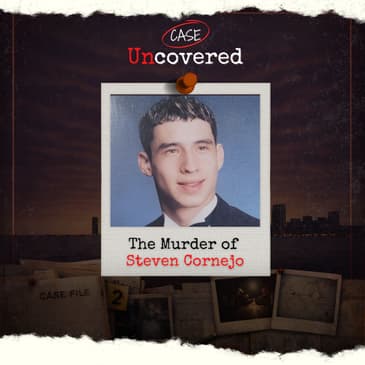
In this episode, I sit down with Steven's cousin, Jessica, along with journalist Dave McKenna, to examine the events leading up to Steven's death, the investigation that followed, and why his family continues to fight for answers twenty years later.
If you'd like to learn more about Steven's story or connect with his family, please visit the Facebook page created in Steven's memory:
Steven's Facebook Page
A special thank you to Jessica for trusting me with Steven's story and sharing her family's journey. I'd also like to thank journalist Dave McKenna for sharing his reporting, insight, and perspective on this case.
Case Uncovered is a part of the non-profit The Reignited Project. I founded The Reignited Project, a 501(c)(3) dedicated to supporting families of the missing and murdered through advocacy, education, and resources. After walking through a missing persons case within my own family, that mission became even more personal. We are now developing the Linda Brown Advocacy Protocol, a trauma-informed initiative designed to help families navigate the early stages of a missing persons case with clarity and support.
Learn more: www.thereignitedproject.com
Support the show: https://buymeacoffee.com/jenriverainvestigates
Connect with me on social:
Instagram: @jenriverainvestigaties
Facebook: Jen Rivera Investigates
YouTube: @jenriverainvestigates
Visit my website: jenriverainvestigates.com
Case Uncovered is a Reignited Media & Fire Eyes Media Production hosted & Produced by Jen Rivera.
Become a supporter of this podcast: https://www.spreaker.com/podcast/case-uncovered--6440550/support.
It's the early morning hours of June twenty fifth, two thousand and five. Twenty three year old Stephen Cornejo is spending the evening with friends. After a night out celebrating a birthday. The group heads back to an apartment complex in Fairfax County, Virginia. It's late. People have been drinking, and outside the apartment building, a confrontation begins. What starts as a verbal exchange quickly turns physical. Within moments, a gun is drawn. By sunrise, Stephen Cornejo is dead. The people who loved him expected answers. What they got instead was a fight that would last for decades. Hey everyone, and welcome back to Case Uncovered, where we uncover some of the most compelling and lesser known true crime cases. I'm your host, Jen Rivera. Before we get started, I just want to say how good it feels to be back. Over the past several weeks, I've been focused on several projects and took some very much needed time to recharge. But I'm excited to share that, beginning in July, a Case Uncovered will be returning to its regular weekly released schedule. I'm also excited to share that I'll be launching a brand new video series on my YouTube channel called Behind the Files. While Case Uncovered focuses on the stories themselves, Behind the Files will take you behind the scenes of this work what it's really like working with families, researching cases, navigating the ethical challenges of true crime's storytelling, and answering the questions that rarely get talked about in this space. It's also a chance for me to connect with all of you in a more personal and unscripted way. So if you've ever wondered what happens behind the microphone, behind the investigation, or behind the advocacy work, make sure you're subscribed to my YouTube channel so you don't miss it. My handle is Jen Rivera Investigates Now. Today's case takes us to Fairfax County, Virginia. For more than twenty years, Stephen Cornehou's family has fought to make sure his story isn't forgotten, and while this episode explores the events surrounding Stephen's death, it's also about the people left behind and their determination to continue seeking answers all these years later. This is the Murder of Stephen Cornejo. Before we talk about what happened on June twenty fifth, two thousand and five. I want to give you a better understanding of who Stephen was, because for his family, Stephen isn't defined by the way his life ended. He's remembered for the life he lived and the person he was. My name is Jessica me Heavar Fernandez, and I am actually Stephen Cornejo's first cousin, so we come from a Hispanic Latino family, so, as you know, our family all integrated here at the same time. We grew up in Falls Church, Virginia, and although Stephen was five years older than me or so, we had kind of like two age groups. We had the big kids who were like seven eight years older than us, and then we had the kids that were like our age, and Stephen kind of fit in the middle of both of those. Jessica and Stephen grew up in a large, close knit family in Falls Church, Virginia. Multiple generations shared a home together, aunts, uncles, grandparents, cousins, and in a family that large, it would have been easy for someone Stephen's age to spend all of his time with the older kids, but according to Jessica, that's not who he was. So we all lived in the same house growing up, even lived outside of the home for a little bit, but eventually came to live in the house with a bunch of cousins, a bunch of aunts, uncles or grandparents. Like we all lived in the same house in false Ter for a long time, so Stephen kind of fell in the middle of those two age groups, and he very much so made sure that he was part of those two age groups. So as Mi kis, he would go out with my sister and my cousins, and he played soccer and he was the cool guy at school. He also played with the younger cousins and we would set up booby traps in the basement and we would make haunted houses. We would make comedy shows and we would present it to each other and whoever was the funniest one. So he was always coming up with such creative, fun things to do. We loved playing board games together. That was another thing that he enjoyed. I don't know if you would like people knowing this, but he collected Pokemon cards until he was way too old, and we would and he would get so excited and he would get like the shiny cards. I don't even know what they are. Jessica discusses Stephen being nurturing, protective, family oriented, and having an amazing heart. He was also a talented athlete. Stephen played soccer and eventually became co captain of George Mason High School's state championship soccer team. But when Jessica talks about him, trophies and accomplishments aren't what she remembers the most. She remembers how he made people feel. There were just different sides to Stephen. He was a nurturing person, He was protective of his family, He was so family oriented. I feel like I could go on about him for a very long time. But he just had an amazing heart, and you know, he went through a lot as a child, and nonetheless I still feel like he was such a great person. In June of two thousand and five, Stephen was twenty three years old. Like so many young adults, he was focused on work, friends, family, and whatever came next. No one knew how quickly everything was about to change. Just four days before he died, Stephen attended Jessica's high school graduation. Like so many milestones before it, he showed up to support the people he loved. Neither Jessica nor anyone else in the family could have known it would have been one of the last memories they would ever share with him. So Stephen was definitely a person that would show up if you know, to any family events, birthdays. I had just seen him four days prior at my high school graduation, so that was the last day that I was with him. But he passed away on June twenty fifth, two thousand and five. He was at a friend's birthday at David Buster's that day, and I guess they decided to go to an apartment. I don't recall if it was someone that was at Dave and Buster's or they just went to their house afterwards, but they, you know, took the party from there and then went to the apartment in Fairfax, Virginia. And we're, you know, doing what early twenty year olds do. As the evening continued, the group eventually made their way to an apartment complex in Fairfax County. At first, it was a typical night among friends, but sometime during the early morning hours, things began to unravel. When Steven went to this party, he went with a girl who he was talking to. Let's say, but it seems like, you know, she got a little bit too intoxicated, and he told her outside to talk to her. I don't know if they were arguing at the time, but they also had a third friend come out and try to calm down the situation. When all three of them were outside of this apartment, one of the neighbors came out and told them to be quiet, and I guess when that happened. The guy took the girl and they left, so Stephen was kind of left there with this neighbor. It sounded like there were some verbal exchanges happening. This person ended up putting his hands on Stephen's shoulder, which led them to have a physical altercation. As they were having the physical altercation, Stephen was hit many times with the gun, you know, according to his autopsy, and even when we saw him at the funeral, it was very cleaner that he was hit with something very hard on his head, on the top of his head, on his forehead, all over his body, even on his hands, yeah, cratches on his elbows, and so they engaged in altercation. Exactly what happened during those final moments would later become the subject of years of legal proceedings, conflicting testimony, and intense debate, but there's one fact that has never been disputed. A shot was fired. The person who was in the altar or the physical altercation with Stephen. He brought out a concealed gun, I believe they call it like a snake pellet gun. So he was hitting Stephen with it and eventually Stephen was shot in the back. When the chaos ended, Stephen had been shot, and for the people who loved him, life would never be the same. As the sun came up that morning, Stephen's family had no idea their lives were about to change forever. So I was very young at the time. Steve actually passed away on my eighteenth birthday. I was going to college, like, I had a lot of things going on at the time. So the person who was heavily involved in the aftermath was my mom, Stephen's dad, who was my mom's brother, and then their other brother. So they were a lot doing a lot behind the scenes with the logistics trying to figure out what happened. It almost felt like off the bat, the police was not necessarily on our side. You know, we're a very close family, and it felt like almost immediately that they took the person who shot him's side. So you know, there were moments where my family was trying to find you know, they wouldn't give the name out of the person who shot Stephen. For example, there were many times where we heard through the grapevinds that they were asking if Stephen was getting involved, which was one thousand percent not true. Law Enforce never contacted Stephen's dad. Stephen was identified, his body was identified by some friends, and his dad had to hear that his only son at the time died through my cousin calling my uncle, who then called Stephen's dad. It was just a lot of really strange things just kind of happening off the bat. It took a long time for my family to get the name of the person who shot him. It felt very strange. In the hours and days that followed, the Cornejo family found themselves searching for answers while trying to process an unimaginable loss. What happened to next would leave a lasting impact on how they viewed the investigation. After Stephen passed. His date of his funeral was the beginning of July. You know, after all the top season everything, It kind of started with some weird stuff that was happening. Even then, my mom had asked if since no one in the family saw his body, she asked if they could come see him at the morgue, and they wouldn't let you know, my mom or his dad see him. And then when his funeral came around, my mom asked, we would like to see the body, but please have it without makeup. Is that possible? They say yes. So my family arrives there the day before the funeral and he had already had all his makeup on, which was very strange, but nonetheless, I mean it was clear. So he even had, you know, bruises and cuts and lacerations all over him. Then in August of two thousand and five is when the detective, the lead detective of the case, presented the case to the grand jury. When he presented the case and the grand jury, they declined to bring criminal charges to the person who shot him. Just weeks after Stephen's death, the case was presented to a grand jury, no criminal charges were filed. For Steven's family, that decision marked the beginning of a year's long effort to understand why. During that time after that happened and no criminal charges were brought. That's when my family, you know, was looking for attorneys because they would not provide the shooter's name, so they were getting an attorney. A lot of the attorneys would say that they would want it to take the case and then would back out or just never return my family's long calls. Eventually, my family would also have to hire a private investigator to get that individual's name so that they could file a civil suit. Even after just kind of going back to when it was presented to the grand jury, the lead detective kind of told them that it was self defense, that Stephen was abusing the girl. Although she presented with no Marx bruises, she has no recollection of the night unfortunately, but you know, she declined that Stephen had, you know, abused her or hit her. The detective was definitely kind of trying to convince my family, like, you know, he died, just kind of let it go type of thing. There's, you know, nothing you can do pretty much. So eventually they found an attorney that was able to help us out with They filed a wrongful death lawsuit and we went to court, I want to say, in like March two thousand and six. Yeah, so maybe like a year and a half later. For Stephen's family. The grand jury's decision was devastating, but it wasn't the end of their fight. If the criminal justice system wasn't going to move forward, they would pursue another path, a civil lawsuit. Unlike a criminal case, where prosecutors must prove guilt beyond a reasonable doubt, civil cases operate under a different standard. The question isn't whether someone should go to prison, the question is whether they can be held legally responsible. And for the Cornejo family, that distinction mattered. During that time. My family was awarded. Yeah, during that time, after the family won that the shooter he filed for bankruptcy and so he never had to pay for anything that, you know, he was held accountable for. I think after that my family was very, very tired. I think we spent so much time and money trying to, yeah, get justice for Stephen, right. But it also feels like during that time, it's like we almost put a pause on our mourning and I think we noticed, like, Okay, they're not going to help us out. We felt very defeated, and everyone kind of moved on with their lives. You know, his dad ended up getting remarried. He had two children after Steven passed away. I went to college, and everyone kind of just went their way, although we still had this trauma, this pain that my family always had on the inside, and it was very difficult to talk about and it's still difficult to talk about even twenty years later, and with the injustice that we felt, it's made it that much harder. The family eventually pursued a civil case, and while that process resulted in a significant verdict, it didn't provide the closure they had hoped for. Over time, life moved forward, but according to Jessica, the grief never truly dis appeared, and neither did the questions. As years passed, Stephen's family continued searching for answers, but they weren't the only ones, because there was someone else who couldn't stop thinking about what happened that morning, a journalist named Dave McKenna by. It was Dave Patna. I'm a Ryan in Washington ac Defector Media, a sports and culture website out of university. I grew up in False Church, Virginia. I was a sportswriter in Washington, Act of Washington State Bayward. In June two thousand and five, when the killing happened, and I started following it. Steve of the kind of a celebrity. It was captain of the first first team from George Madison High School in the older state championship soccer team. And he has somewhere now. And it never made christ to me in this story, like anyone who looks into it, I believe would come away with the same thing. It makes no sense. The only options are for the police, police and prosecutors toroned up are incompetence which is most likely uh combined with racism which is very evident, or a conspiracy to protect the shooter who was working for an intelligence, who's a Navy veteran working for an intelligence. The shooter was white. Stephen at a time when Fairfax County was going through and incredibly racist Tile Salvador phase because of the workers center that must be built and hurt in section of the county. It was the host political issue that had become a national topic. They called it the beach front of right wing Russian in ball sort of a radio. They called it Fairfax the beachhead of the anti immigration movement. They called it the immigration reform movement. But it was the most hateful thing I ever seen I mean, and again, I'm old, and I grew up in Virginia in the six Pies. I know racism. I mean, what. Does the observer? And but uh, I'd never seen anything like this when you could say anything like that. The people in the Washington Post and on radio, they were calling me to say they were spreading social diseases, never sting, and like the most ridiculous. It was just over season and a foreshadowed what the whole country is going through today. But it was I never exposed anything like that. And so I uh like at the time why this happened, like it just never made sense, and it stuck with me in one way. They won the civil at the civil trial incompetence or or whatever of the of the farefriscalty system. Mostly the police came out because these witnesses showed up at the silk trial who were completely ignored during the criminal procedure, like you and and you don't really need to know money out in his case beyond an old armed man was shot in the back and the shooter was allowed to claim self defense. That doesn't happen. Haven't been no witnesses, which the prosecutor kept playing you there's no witness. There's no witness, and then my witnesses show up, they say, oh, they lie. At the time of Stephen's death, Dave was working as a reporter for the Washington City Paper. Stephen's story wasn't just another assignment. It was a case that never quite made sense to him, and over the years, as more information surfaced, that feeling only grew stronger. But before we get into those efforts, it's important to understand the official position taken by prosecutors. Three years after Steven's death, Fairfax County Commonwealth Attorney Ray Morrow authored a twelve page letter explaining why criminal charges would not be pursued. In that letter, Moro outlined what prosecutors believed happened that night. According to the Commonwealth's review, Stephen had been drinking, an argument occurred, a physical confrontation followed, and the individual who shot Stephen claimed he feared for his safety during the altercation. The letter ultimately concluded that prosecutors did not believe they could prove a criminal case beyond a reasonable doubt. For Steven's family, However, that explanation raised more questions than answers. I emailed the former mayor of false Church, Robin Gardner, and he was someone who really advocated to the Commonwealth Attorney of Virginia to reopen Steven's case after they didn't prosecute for criminal charges. Then you know, she met with me and she had some connections, you know, with lawyer and a lawyer that she knew who actually told me that she had never taken a case of this magnitude and that it would be maybe more beneficial to getting contact with senators, congressman's politicians. After that, Dave and I actually went in I believe September twenty twenty five, we went to the Commonwealth Attorney's office in Fairfax County at the courthouse I had previously called, and they basically told me like, oh, they won't take this case. So I was like, Dave, you want to come with me. I'm going to go to the court And he was like, and I'm just going to ask in person. He was like, yeah, I'll come. So we met at the courthouse. We met a very nice gentleman who we didn't really explain the story to him, just because you know, if they weren't take the case, he didn't want all the information or receive all the information. But told us that our next step would be to go to the Fairfax County Police Department that resonated with where Stephen passed. So we were like, hey, you got some time today, you want to go do that now? We want to go to the police department now, and Day was like, yeah, let's go. So we went to the local police department. We waited a while to talk to someone, but we eventually were able to talk to a police officer who was taking information and then she would take it to her supervisor. She would come back and ask us for more information, go back to her supervisor, and eventually after a couple hours, they told us that where they were gonna have Cold Case call us. So after that meeting with them, I actually had Cold Case call me that that night and they wanted to set up at meeting. I set up the meeting for late September, Yeah, late September of twenty twenty five, and I met with the detective and he I presented the case right kind of very actual things that happened during the altercation, for when Stephen died, what happened after the fact, things that were presented during the civil trial. It felt like things went really well. He you know, said he would get in contact with me. During the winter break of twenty twenty five, he contacted me and said that, you know, he wanted to set up another meeting. And during that meeting, he said that I would be presenting the case just like I did the first time, and that it would be to his partner and possibly like a supervisor. And so I was like, okay, great, that, you know, means that the first meeting went really well, you know, like to present it to his other staff members. So then in February twenty twenty six, when we had that second meeting with cold Case, and he's very prepared as I did the first time, and she kind of cut me off, and he said that there was a twelve page letter that he needed to read to me, and I thought it was strange. I was like, okay, So I let him read the twelve page letter and he kind of introduced it as being a letter that the Commonwealth Attorney or the assistant Commonwealth Attorney at the time. When Stephen died Ray Murrow, he then became the Commonwealth Attorney. The initial Commonwealth Attorney, Robert her Aunt, retired, and then when we were trying to get criminal charges. After the civil trial, he indicated that he made it that he was an independent reviewer Raymurrow, and that he had looked back into the case and he had explained how Stephen was the aggressor, that he was severely intoxicated, that he basically made this person look like a hope in the letter, and that to a degree that Stephen caused his own death. And so as is reading this, I completely disassociated, Like I was like, Wow, I know where this is going. It's where it's gone this entire time, and for some reason I thought this time would be different. I just wanted to have that inkling of hope, and it wasn't. Jessica says hearing the contents of that letter was one of the most difficult moments of her advocacy journey for Stephen, not only because of its conclusions, but because she felt it painted a version of Stephen that didn't reflect the man her family knew. And there were other concerns as well, questions about witness testimony, questions about physical evidence, and questions about actions taken after the shooting. According to Jessica, her family was later told that the individual who shot Stephen changed clothes, showered, washed the firearm, disposed of ammunition, and initially denied involvement before later speaking with investigators. Not only was this information told to the family, it was also presented in the twelve page letter and was noted as suspicious behavior. He ripped up his shirt, blushed it down the toilet, he washed his shorts to the shower, washed his hands, he washed his gun, he flushed ammunition, he hid ammunition, and then when the police were campus, initially lied that he didn't know anything about what had happened outside, and he turned himself into three hours later. For the family, those details became difficult to reconcile with the official conclusions, and they weren't the only ones asking questions. This body Steve's I told the store, and it came out It wasn't He wasn't allowed to tell it until instead of trot where he had five gashes in his head five three in the back of his head, gashes where they cost submurder. The subhem I mean they caused severe in port the alcoholic severe uh wounds below the skull, and the two on the free in the back. And the shooter who was treated as the victim of his attack and new Marks, and you can see the pictures of him. Now Mark's at all whatsoever. And they get their story that the day one story. The first time this was raised in the Washington Post was Tuesday. The murder was sundayrise, Briturday morning. The first time this was mentioned phone Tuesday, three three days from here from an interview Monday, two days later. First day Robert rand Cross curR and the most powerful man in Virginia politics. He had been in office for thirty seven years. He told the Washington Posts like he was asked by the Post, the want the story together, saying is there a crime? Wave had just murdered, And he right away said I won't it self defense of that, and everything he did from that point longs to defend his case that this was not a murder, This was a self defense just and none of the evidence. It made no sense that this guy was shit somebody. One witness whose testimony would later become a significant point of discussion, reported seeing portions of the confrontation from close range. According to Dave, that witness's account differed from portions of the narrative that prosecutors ultimately relied upon, and for critics of the investigation, that discrepancy became one of several lingering concerns. For Dave. The issue was never about a single witness or a single piece of evidence. It was the larger picture, the unanswered questions, the investigative decisions, and the belief that important questions remained unresolved. For Dave, Stephen's story had never completely left him either. It was a case that truly stayed with him, and Dave and I really connected when we were talking about the impact these stories and families have on us as professionals in this space, but also as humans who have empathy and deeply feel for these families. It was truly heartbreaking to hear how much Stephen's story has impacted Dave as he fought back tears. Like you can't understand them, sticking the story when everything that cup came out, it's from the autopsy on you know what, this is murder. This was murder is shutting. You can't shoot a guy in the back and even like and another thing, but this stuck with me, Like when I heard we saw the vestige of Jessica, like Oddy, like I am and jessicicking tepus, I'm fucked up. If you can say that on their podcast by the store, because I could see up a plus the the pain and I thought I'd done this enough. But to see how close like the pain it costs, and the incompetency and just like that, the it's so maddening, like because the fairfacts to this day, they denied every four yer request I made, the police, the courts, everybody. One hundred percent of my Foyer requests were denied for police reports that the detective they refer to things that don't exist. For like a two thousand and five interview with the witness who showed up at this liberal trial to say, yeah, I saw it for ten feet away. I saw him shooting in the back that you know. Uh. The the police say, oh, well he changed the story. He didn't tell us that, you know, one of the night of the thing. Uh. And this report that they kept referring to, I keep making Foyer score and it doesn't and what's not either they're hiding it or it doesn't exist, may be a twisted with every request has been denied, and including Cereal, weben say like I would, They said, you didn't even where's where's my you know, where's this report? You didn't request that, and I would cut and paste. Yes, here's my request for the two thousand Times June two thousand program interview between detective showing for and witnesses throughout the day. Well where's it? You didn't even rese that, like even in response to cutting my request, And I'm going, how do you? What is the Uh? It's hard to talk about it as I'm crazy, but like I swear to God, anyone will to do this. I think something crazy and another thing like I talked to for the story I did. I went crazy on the store, I talked to everyone hates me at work. I went and spent way too much. But they do any words on it. But it's fascinating for all the wrong reasons that that that this system really does work like you always feared that it did but didn't want. The behavior of the legal system in this case is completely in explicable, Like they spent all the only efforts after the after that night, the only investigations they did were to demonize the dead kind. They did zero to toat and there's so much, you know that they could have done if they wanted a conviction, and there's so much there they they didn't want it. They worked reason the other How did this guy get away with this? And and and that's that, you know, that's that's me. And I go back and read my story, How the hell did this happen? And I have no answer. I still have no answer. Like like the situation just to described with the treatment even recently by the cold case guy, who who was incredibly responsive right away he called Jessica confirmas I think within an hour of us leaving the police station he called up and and and that's this is like, you know, a courtesy that the family hadn't gotten in twenty years except for that day, across two years, Office Sky was incredibly nice, and you know, and for him to the stuff that he presented, like this twelve page letter, it's not part of the case. It's a it's dated a week before the actual document that I was sent to the Bear, which was three pages long. This is twelve pages. I don't even know what the hell it is. And they're saying this is they're basing the whole decision to not reopen the investigation on a twelve page document that it's kind of like Hitler's Hitler's Diaries. It's like where the hell did this come from? Did this just come out of thin air? Now, it didn't exist, you know, in two thousand and five. So it's a it's a it's a it's a it's a head scratcher inland. And what you said about you know, that was the realization. That doesn't make it easier to take, but the realization. That's what my wife thought. What she said to me, she said, you know this, this is one. Yeah, this happens every day somewhere, so you don't you know, so paint out there and it's like somebody I might have been Jessica who said to me, I said, what's some moral it's you know, when somebody dies. Mm hmmm, when somebody dies, you don't get over. I feel that, Dave, I do, and Jessica. And this just goes to show like how sad these cases are because when when it they affect you like this and it's not even your family. You know, it's not even your family, but you can feel it so deeply to just imagine how the family's feeling and how you're feeling, Jessica and your family. And this is why I do what I do, is because I know that this is a problem with a lot of these cases and families getting treated terribly and not getting justice for the victims. And it's so hard because you try to do all the right things right and then when the police and the investigators are fighting against you, it makes it really difficult. But this is why it's important to get loud, because this is the best thing you can do. So what you guys are doing is the best thing that you can do. Get loud. Don't let Steven's name go away. You just keep it in their place all the time because you never know. I mean, obviously there's no guarantee that there will be justice, but you can always help and pray that there will be. And you keep fighting. You never stop fighting. You keep bringing his name up, you keep talking about his story. Years after the original investigation, Jessica and her family submitted FOYA, or Freedom of Information Act requests, in an effort to obtain additional records related to Stephen's case. Among the records Jessica eventually received was a copy of the twelve page letter she had heard about for years. Well the letter itself wasn't new, this was the first time she had the opportunity to review it in its entirety. Annecy first hand reasoning behind the decision not to pursue criminal charges. Actually, the day that we recorded the first interview, I received the Foyer requests that we had we had asked for. There are still some things that seem like they're missing, and we're unsure why the twelve page letter is in there. You know, we're at the point where my family and I are very transparent and we want to be transparent about what, you know, what has happened, especially because that letter, you know, outlined why they would not press criminal charges against this person after the civil trial, and although it was addressed to the mayor, you know, in two thousand and eight, she only ever received three pages, but then when we met with Cold Case, there was twelve. So it was interesting for Jessica. Finally reading the letter didn't bring closure. Instead, it reinforced her determination to keep searching for answers. Over time, Jessica's definition of justice evolved. In the beginning, her focus was singular. She wanted accountability for Stephen's death, but after two decades of fighting, grieving, and learning, her mission expanded. Today she wants people to know who Stephen really was. She wants other families to understand that they aren't alone, and she wants families facing similar circumstances to know that it's okay to ask questions, it's okay to advocate for your loved one, and it's okay to keep searching for answers even years later. My journey has taught me, like in looking back in hindsight, Oh okay, I was experiencing PTSD. You know, I couldn't say Stephen's name, I couldn't drive. You know. Where he passed away was right by the all that we went to. I couldn't go to them all anymore. I uh, you know, was startled at loud noises, and you know, in reading books and going to school and learning more about mental health, I learned that I really had post traumatic stress disorder. Even though I wasn't there, I didn't see him pass away. I would constantly picture it, or I would replay images of my dad telling me about how Stephen had died, and I could tell you everything. I would also like his funeral to you know, now that I know about mental health, the whole dissociating part of it. When you go to a funeral that's so traumatic and you it almost feels like you're watching yourself in a movie, like it's not real. So I think putting a name to things that that I had gone through after learning more about mental health and how it impacts your brain, was really helpful for my healing process as well. I feel like when it comes to grieving and the trauma that's come because of this loss that we've experienced, and because it's been so long too, that different family members are kind of in different places. So there's some family members that like for my mom, for example, she's kind of like, Okay, well I had to be the executor and I had to plan the funeral and you know, find the lawyer, and like, you know, her grieving was really put on pause and now she's like really starting to process it. And almost the same thing with Stevens's dad, So I think that we're all in different places. I mean, ultimately, justice for steven would mean that this person went to jail, but at the same time, it's like, whatsever enough for losing a family member? I think mostly it's like putting the word out there that this happens often kind of like what you mentioned before, and maybe if we knew better back then, we would have been able to handle things differently, but you know, as an immigrant family, that is really difficult to know how to navigate these things. We've never been through something like this before, so I think more than anything, it's awareness for other families advocacy. But I also wanted to acknowledge that there's a lot of things that are out of my in my family's control. And I told myself that after meeting with Cold Case, that I if I met with them and it didn't work out, that I knew that in my lifetime that I tried my hardest and then I met with Cold Case and it didn't work out, and then I didn't stop. So you know, at this point, I don't know if it's ever going to look out for me and my family. But if you know Stephen's death can be utilized to help other families speak up for these injustices or these these cases that just are rushed through, then I think that that will be able to help me heal a little bit better. Today, more than twenty years have passed since Stephen Cornejo lost his life. His family continues to advocate in his memory, while the legal proceedings have long since concluded. Jessica's commitment to Stephen's story has never wavered. In recent years, she's continued reviewing records, connecting with advocates, and working to ensure that Stephen's story is not forgotten. For Jessica, advocacy isn't just about looking back. It's about honoring Stephen's life. It's about keeping his memory alive, and it's about helping other families understand that they have a voice even when the road ahead feels overwhelming. If I could say anything to Stephen, I'd say thank you for all the beautiful memories, thank you for being my protector, for loving me like a sister. He was so affectionate that like you could feel the love, like how much he loved you, just radiating off of him like hugs and kisses. And you know, I often think where would Steven be right now? And I picture him like he was always amazing with kids, so I knew that he'd be married and he'd had children, and unfortunately, you know, his life was cut short at twenty three years old. But I know that there was a reason that God put him here for twenty three years and he's you know, I want to thank him for just being a positive. Role model for me. Now, you know, I got some thick skin from being raised with all these boys, you know, with wrestling moves and everything that we used to do together. I just want to tell him that I miss him. I think about him all the time. And actually I can tell like a quick story my uncle, Steven's dad. One time he called me and he said, I need to come see you right away. And I was like, oh, my god, am I in trouble right now? Because you know your aunts and uncles that you can get in trouble with them too, not just your parents in the Hispanic family. And he's also my godfather. So I was like, oh, man, what did I do? And so he came over. He drove. At the time, he lived like an hour and a half away from me. I drove to see me and he said, were you crying about Stephen last night? And I said, yeah, actually I did cry myself to sleep. And this is maybe a year after he passed away. And my uncle said, okay, wow, Stephen came to me in my dream last night and he told me to tell Jessica to please stop crying, that I'm happy where I am, and like I got goose bumps because I legit had cried myself to sleep the night before and my uncle said, and he also mentioned grandma. You and grandma, and my grandma passed away two years ago, so I know her and Stephen are together now. But you know his next stop was to tell my grandma because my grandma took his his passing really hard. But just the fact to know that he's watching me, and he's created this belief system in me where like, I know that our loved ones are watching over us and protecting us, and that you know, whenever our time comes, they're going to be the first ones that greet us. If you'd like to learn more about Stephen's story or follow the family's ongoing advocacy efforts, be sure to visit the Facebook page created in Steven's memory. I'll include a direct link in the show notes below. The page serves as a place to share updates, remember Steven and connect with others who continue supporting the family's efforts to keep his story live. And if there's one thing Jessica hopes people take away from Stephen's story, it's that he was so much more than the circumstances surrounding his death. He was a son, a cousin, a friend, a protector, and he still is deeply missed by those who loved him. Thank you so much for joining me for this episode of Case Uncovered. It's so good to be back. And if you'd like to hear more cases like Stevens every week. Please make sure you're following or subscribed wherever you listen to podcasts so you never miss an episode. And if you've been listening for a while, or if this is your first time here, welcome Leaving a five star rating and review is one of the best ways you can support the show. Case Uncovered is an independent podcast and every rating and review helps these stories reach more people and you never know it could reach someone who knows something about the case. To keep up with the advocacy work I'm doing through my five oh one c three nonprofit organization, Ignited Project, or to find ways to get involved, you can visit the Reignited project dot com. You can also connect with me on Instagram, Facebook, TikTok, and YouTube at gen Rivera Investigates. Thank you so much for being here and thank you for taking the time to listen to Stephen's story. I also want to take a moment to thank Jessica and Dave for working with me to bring you Stephen's story today. Until next time, stay curious, stay vigilant, and stay safe out there, and w