
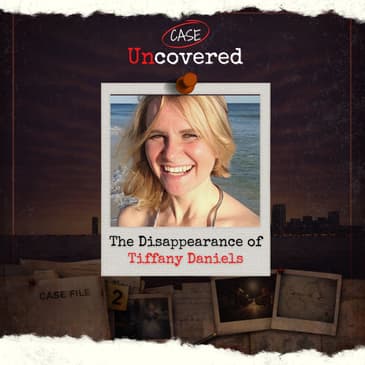
If you have any information about the disappearance of Tiffany Daniels, please contact:
Pensacola Police Department
850-435-1979
This episode is sponsored by Safely, a women-founded company creating modern personal safety tools designed to help you feel more confident and prepared in everyday life. From personal pepper spray to tools like the Safely Sidekick, their products are designed with safety, accessibility, and empowerment in mind.
Learn more or shop their products here:
https://livesafely.co/JEN
Use code JEN at checkout for 10% off your order
Case Uncovered is a part of the non-profit The Reignited Project. I founded The Reignited Project, a 501(c)(3) dedicated to supporting families of the missing and murdered through advocacy, education, and resources. After walking through a missing persons case within my own family, that mission became even more personal. We are now developing the Linda Brown Advocacy Protocol, a trauma-informed initiative designed to help families navigate the early stages of a missing persons case with clarity and support.
Learn more: www.thereignitedproject.com
Our team at The Reignited Project is currently preparing for a donation drive collecting non perishable food items for the Lockport FISH Pantry and local micro pantries in the Chicagoland area. If you are local and would like to donate items or help support the drive, please contact Rose, our Director of Community Advocacy and Outreach at rose@thereignitedproject.com
Support the show: https://buymeacoffee.com/jenriverainvestigates
Connect with me on social:
Instagram: @jenriverainvestigaties
Facebook: Jen Rivera Investigates
YouTube: @jenriverainvestigates
Visit my website: jenriverainvestigates.com
Case Uncovered is a Reignited Media & Fire Eyes Media Production hosted & Produced by Jen Rivera.
Sources For This Episode:
The Charley Project
NamUs (National Missing and Unidentified Persons System)
Doe Network
Florida Department of Law Enforcement (FDLE)
WEAR-TV (Pensacola, Florida)
Lauth Investigations
Become a supporter of this podcast: https://www.spreaker.com/podcast/case-uncovered--6440550/support.
It's August twelfth, twenty thirteen. Twenty five year old Tiffanny Daniels leaves work early that day. She tells her supervisor she needs a few days off. By that night, her SUV is seen crossing the bridge towards Pensacola Beach in Florida. Days later, that vehicle is found abandoned near Fort Pickens with her phone, her purse, her bike, and other personal belongings still inside. But Tiffany Daniels is gone. No clear signs of a struggle, no confirmed explanation, just a haunting timeline, a remote location, and questions that still haven't been answered. Hey everyone, and welcome back to Case Uncovered, where we uncover the most compelling and lesser known true crime cases. I'm your host, John Rivera. Today we're covering a case that has stayed with so many people for years because the more you look at it, the more questions it raises. At first, first, it may seem like there could be a simple explanation, but when you really start breaking down the timeline, the location, the vehicle, the witness accounts, and everything Tiffany left behind, it becomes very clear that nothing about this case is simple. This is the disappearance of Tiffany Daniels. Before Tiffany Daniels became a missing person's case, she was a young woman with a full personality, a life she was actively living, and people who knew exactly who she was. Tiffany Heaven Daniels was born on March eleventh, nineteen eighty eight, in Dallas, Texas. Her family later moved to Pensacola, Florida, where she grew up with her two sisters. She attended Pensacola State College and the University of West Florida, and she was known for being artistic, adventurous, free spirited, and deeply connected to nature. She painted, sculpted, danced, biked, surfed, tiked, and loved being outdoors. Her sister, Candace, described Tiffany as a light, saying that when you were around her, everything felt brighter, more colorful, and more beautiful. Her father described her as a butterfly girl, someone who would literally stop what she was doing to follow a butterfly. At the time she disappeared, Tiffany was working as a theater technician at Pensacola State College. She was helping paint and prepare sets, and the department was about to begin work on an upcoming production of spam Alot. That matters because it shows Tiffany was in motion. She had a job, she had creative work she cared about, she had plans on the calendar. But there were also stressors in her life. In the months before she disappeared, Tiffany had been struggling financially. Her parents had noticed that some of the roommates she found through Craigslist had taken advantage of her kindness and had not paid their share of rent and utilities on time. By the time she vanished, she was reportedly around two months behind on her utility bills, and her phone had been out of minutes for days, making it harder for investigators to track her movements after the fact. And that context matters because this case lives in that tension. Tiffany was a young woman with stress in her life, yes, but she was also a young woman with a future, with interests and people she loved, and with enough going on that those closest to her never believed she simply decided to vanish. The day before Tiffany disappeared begins with one of the most important pieces of emotional context in this case. On August eleventh, Tiffany had breakfast with her boyfriend before he left for Texas. He had just been accepted into a graduate robotics program at the University of Texas in Austin, and he wanted Tiffany to move there with him, but Tiffany was not ready to leave Pensacola. That doesn't mean the relationship was over. In fact, what makes this detail so important is that Tiffany still wanted the relationship to continue. She was making plans to visit him later in Austin. People close to her believed she was disappointed and emotional about him leaving, but also excited about the idea of seeing him again. That part is key because when we look at missing persons cases, one of the first things we ask is whether there was some kind of major emotional event right before the disappearance, And here there was. Tiffany's boyfriend was leaving. He wanted her to come with them, but she wasn't ready. That could have made for a heavy day emotionally. But it also doesn't look like a closed door. It looks more like a turning point, or at least a difficult transition. And again that's really important because it doesn't read like someone wrapping up their life in Pensacola with no intention of continuing on. It reads like someone who was still trying to figure things out, still attached to people, still envisioning what came next. At the time Tiffany disappeared, she had a roommate named Gary Nichols. Gary was fifty four years old and the father of one of Tiffany's friends. He was separating from his wife and wanted to live closer to his job, and Tiffany had been looking for a roommate. The arrangement seemed to make sense. Gary later said they got along well. They shared similar interests like biking and healthy eating, and Tiffany's parents, while not thrilled about her living with a man twice or age, believed she was at least living with someone safe and stable. This part of Tiffany's story is important because the people closest to her in those final days helped shape the timeline of what was going on in her life. Gary was part of that immediate circle simply because he lived with her and was one of the last people known to have been around during the final hours before she disappeared, and in a case like this, those closest to someone always become part of the picture, not because it gives us answers right away, but because it helps us better understand Tiffany's day to day life, who was around her, and what those last known hours may have looked like before everything changed. The day before Tiffany disappeared gives us some of the most important emotional context in this case, as we know that morning, Tiffany had breakfast with her boyfriend before he left for Texas. That same evening, Tiffany and her roommate Gary Nichols watched Mony Python and the Holy Grail. It's a small detail, but one that stood out later because Tiffany was helping prepare sets for spam Alot at work, the musical based on that film. At the time, it seemed like a completely normal night. Then, during the early morning hours between about three AM and five AM, Gary later said he heard the front door opening and closing several times. He looked out, but didn't see Tiffany. He assumed she may have gone into work early and eventually went back to sleep. And that detail is one of those little things that might mean nothing at all, but in a case like this, it sticks with you. Was Tiffany coming and going that night. Was someone else there? Was she restless? Or is it only significant because of what happened next? We don't know, but it is one of the strange details in Tiffany's final known timeline. On August twelfth, Tiffany went to work at Pensacola State College. At some point during her shift, she asked her supervisor if she could leave early and take a few days off. She didn't give a full explanation, though, she simply said she had a couple of things to do. Her supervisor didn't question it and approved it, and at four forty three pm, Tiffany clocked out. That moment is one of the most important details in this entire case, because Tiffany didn't just leave work early. She left work after telling someone she expected to be gone for several days. So the question becomes why was she planning to meet someone? Was she handling something personal, was she trying to figure out her living situation. Was she making a short trip, or did she have plans she simply had not shared with anyone else. Whatever the answer is, that statement sits right at the center of this case because Tiffany never explained what she meant, and after she left work that day, no one would ever get the chance to ask her. After leaving work, Tiffany appears to have gone home briefly. Gary was there, but he was distracted on the phone with his out of state girlfriend and didn't actually see Tiffany come in. That is one of the most frustrating parts of this timeline. She may have passed through the house, she may have grabbed a few things, She may have only been there for a few moments, but if she did return home, no one can clearly place her there. Then, later that night, at seven fifty one pm, Tiffany's SUV was captured crossing the Bob Sykes Bridge toward Pensacola Beach. That bridge footage is critical because it tells investigators that Tiffany's vehicle made it onto the island that night, but it does not tell them who was driving, and that is what makes this part of the timeline so unsettling. If Tiffany was behind the wheel, then she made it to the beach alive, and whatever happened likely happened after that point. But if she was not the one driving, then someone else may have been moving her vehicle after something had already happened to her, and that changes everything. It also leaves a gap of about three hours between the time Tiffany left work and the time her SUV was seen crossing that bridge. That window matters, because somewhere in those missing hours maybe the answer to what Tiffany was doing, who she was with, where she was going, and whether she was ever really alone that night. At first, tiffany being gone didn't immediately trigger panic. She was an adult, she was independent, and she had told her supervisor she needed a few days off, So in the beginning her absence may not have seemed like an emergency. But as the hours passed and Tiffany didn't come home, concerns started to build. Later that night, around ten pm, Gary became worried and tried calling her. He tried again the next morning. By then, her absence was starting to feel less like a change in plans and more like something was wrong. Then, when he returned home and found that the electricity had been shut off, he assumed Tiffany may have forgotten to pay the bill. He contacted his daughter, Noel, who had then reached out to Tiffany's mother, Cindy Daniels. From there, the concern grew quickly. Cindy and others began calling around to Tiffany's friends, trying to find out whether anyone had seen or heard from her. No one had, and by the end of that week, Tiffany's family contacted law enforcement. When investigators searched Tiffany's home, they found no signs of foul play, but they did find something that made one simple explanation harder to believe. Tiffany's tent was still there. This is important because Tiffany loved the outdoors, so if she had simply taken off for a solo escape into nature, why leave behind one of the key things she would have likely needed. The deeper you get into this timeline, the more it starts to feel like Tiffany didn't leave with the intention of disappearing. Something happened, but the question is what then. On August twentieth, Tiffany's gray Toyota Forerunner was found in the Park West parking lot at Pensacola Beach near Fort Pickens on the western end of Santa Rosa Island. A family friend recognized it while out on a morning bike ride, and what was inside the suv is exactly why this case has stayed with so many people inside the vehicle. Police found Tiffany's bicycle, her purse, cell phone, wallet, clothing paintings, a jar of peanut butter, and a jug of water. Her life had not been neatly packed away. It had been left sitting in that vehicle. That doesn't feel like someone carefully starting over. It feels like something interrupted the natural flow of Tiffany's day. Fort Pickens also matters as a location. Tiffany had hiked in that broader area before her mother had warned her not to go hiking alone, so the setting is not completely random. It is a place Tiffany could plausibly have gone on her own, but it's also remote enough that if something happened there, whether by accident or by another person's hand, there may have been very few witnesses. And that remoteness is one of the reasons this case feels so haunting. It's a beautiful place. It's open, quiet, there's wind, sand and water, the kind of place where someone could go to think, or the kind of place where something terrible could happen without anyone hearing a thing. To build the timeline, detectives reviewed security footage from the Bob Sykes Bridge toll booths, which connect Pensacola to the island. That footage showed Tiffany's suv crossing the bridge at seven fifty one pm on August twelfth, the night she disappeared, but the footage couldn't determine who was actually behind the wheel. This is another major dividing line in the case. If Tiffany was the one driving, then she made it to the beach alive that night, and whatever happened likely happened some time after seven fifty one pm. But if she was not the one driving, then the suv crossing that bridge may represent someone else moving her vehicle after she was already gone, and that changes everything. It also leaves us with a deeply frustrating gap in the timeline. Tiffany clocks out at four forty three PM from her job, her suv crosses the bridge at seven fifty one pm. That is roughly a three hour window where the case becomes murky. That stretch of time may contain the answer to everything. Who she met, where she went, what she planned to do, and whether she was alone. When police examined Tiffany's suv more closely, they found two fingerprints, one on the door handle and one on the steering wheel that did not match Tiffany. Police ran them through a database but were unable to identify them. That is one of the details in this case that really stands out, because if those prints belonged to the person who drove or handled Tiffany's vehicle after she disappeared, then clearly someone else was there, someone else touched that suv, and therefore someone else knows exactly what happened. And then there are the witness statements. One resident near the area said the suv had not been there until roughly two days earlier, which would place it there around August eighteenth, several days after Tiffany vanished, though that timing could not be confirmed. Two other residents reportedly said they had seen a man getting out of the vehicle on August twentieth, and later another witness came forward saying they saw a man in his thirties, shirtless wearing red shorts opening the tailgate of Tiffany's truck. The witness remembered it because the suv was parked facing oncoming traffic in an area reserved for wildlife. That is not a throwaway detail because If Tiffany disappeared on August twelfth, and a man was seen with her vehicle days later, then the obvious question is who is he. Was he connected to Tiffany, was he the driver, was he moving items? Was he checking whether anyone had found the suv yet? Or was he somehow unrelated, which honestly seems harder to believe. This is one of the reasons so many people struggle with the idea that this was just an accident. Now, let's dive into some of the theories, because there are quite a few in this case. One of the earliest theories is that she may have gone to Fort Pickens on her own, biked or walked around the area, and somehow ended up in the water or otherwise suffered some kind of outdoor accident. There are reasons people considered that Tiffany did love nature, she hiked in that area before, and police had found sand on the bicycle tires in the suv, suggesting she may have been riding on the beach or in the dunes. There was a meteor shower that was happening around that time, which made the idea of Tiffany going out alone to the beach feel plausible to people who knew her. She was the type of person who might absolutely go somewhere beautiful and quiet just to be alone with her thoughts. And on the surface, that theory has a certain logic to it. A free spirited woman, a remote beach area, a bike, sand on the tires, nightfall, open water. If you stop there, it almost sounds explainable. But the problem is that the rest of the evidence makes this theory much harder to hold on too cleanly. Searchers canvassed the island. Family and friends went door to door in the area and nearby residential complexes. Canines were sent out there to search. Clothing and jewelry were found during those search efforts, but none of it was determined to be Tiffany's. No confirmed trace of Tiffany herself was found in the area. Then you add in the unidentified fingerprints. Then you added the witness statements about a man near the suv and the uncertainty about when the suv was actually parked there, And at that point, accidental drowning starts to feel less like a full explanation and more like only one piece of a much larger puzzle. Could Tiffany have gone there on her own Yes. Could she have had an accident, Yes, But does that one theory fully explain the vehicle, the prints, and the witnesses. No, not on its own. Now, before we continue, I want to take a moment to talk about personal safety. When you hear a case like Tiffany's, it's a reminder that personal safety matters so much. So many of these cases begin during everyday moments, leaving work, driving somewhere familiar, going about your normal routine, and that is exactly why taking steps to protect yourself is so important. That's one of the reasons I personally love Safely. I've been using them since twenty twenty four and it's I highly recommend their products. Safely is a female founded personal safety brand focused on creating products that help women feel more confident and prepared in everyday life. They offer products like pepper spray, practice Spray, and the award winning Safely Sidekick, which is my favorite. The Safely Sidekick is an all in one personal safety device that includes pepper spray, a flashlight, an alarm, a grip, and a swappable attachment. So if you've been wanting to be more intentional about your personal safety, visit livesafely dot co to get your own personal safety products and use my code Jen for ten percent off your order. Thank you to Safely for sponsoring today's episode. Now let's get back to the case now. For years, one of the most talked about theories in Tiffany's case was that she may have been trafficked, and that theory did not come out of nowhere. In twenty fourteen, a waitress in Louisiana, right outside of New Orleans, reported seeing woman who looked very much like Tiffany. She had entered the restaurant with two other women, one older and possibly Latina. The waitress said both younger women behaved oddly and wouldn't make eye contact, and the older woman did all the talking. Despite the warm weather, the younger woman reportedly wore long sleeves pulled over their hands. When the waitress commented that the young white woman looked like a missing woman she had seen on the news, the group asked for to go bags and left quickly. By the time investigators looked into it, the surveillance footage from that day had already been recorded over for Tiffany's family. Two details made that sighting feel especially powerful. First, Tiffany had a habit of pulling her sleeves over her hands when she was cold. Second, the waitress recalled the woman asking whether a soup was made with chicken or fish broth, and Tiffany was prescatarian and known to ask those type of questions. That is the kind of det tale that gets under your skin because it's so specific. Not just she looked like her, but a habit, a food preference, and a mannerism. And once that lead came in, Tiffany's family began researching trafficking more deeply. They were especially concerned because Interstate ten, which runs from Pensacola through Louisiana, is often discussed as a major trafficking corridor. Tiffany was also described by her mother as trusting, someone who saw the good in people and didn't believe there were bad people out there. To her family, that made her vulnerable in a very particular way. There were also other sightings over the years, including tips from other places around the country, but none of them were ever confirmed. Now Here is where the theory gets more complicated. More recently, in twenty twenty five, private investigator Brandy Mitchell said that after spending years on the case, her team had largely moved away from the trafficking theory. That doesn't mean the families earlier concerns were unreasonable. It means that as more information came in, the people working closely with the case felt other explanations began to fit better. So the trafficking theory remains one of the most emotional and haunting possibilities in this case, but at this point it doesn't appear to be the direction. Current private investigative efforts lean most strongly toward. Another theory that at least publicly, seems to have gained the most traction in recent years, is that Tiffany had met someone up that she knew the day she disappeared. Private investigator Brandy Mitchell said her team believes Tiffany was more likely harmed by someone she knew than randomly abducted by a stranger. She specifically raised possibilities like someone being in love with Tiffany when she didn't feel the same way, or jealousy from someone from her past wanting a relationship with her and she wasn't interested. She was clear that these were theories, not confirmed conclusions, and when you really walk through the known facts you can see why this theory has become so compelling. Tiffany leaves work early and says she needs a few days off. That suggests some kind of plan. She may return home briefly, then later her suv is seen crossing onto the island. Her most important belongings are left inside the vehicle, unknown fingerprints are found on it. Witnesses report a man near the suv days later. That combination can fit a scenario where Tiffany either agreed to meet someone or willingly went somewhere with someone she didn't perceive as a threat, and that is often what makes these cases so painful. It's much harder to sit with the possibility that Tiffany may have been harmed by someone she trusted, or at least someone she didn't immediately fear. In twenty twenty five, reports said that among the people helping the family early on, one person later lawyered up. Although that isn't proof of guilt and there are so many reasons someone may seek legal counsul it is a detail that clearly shook Tiffany's family. It reinforced their feeling that the answer may be much closer to home than they once thought. This theory also helps explain why Tiffany might tell her supervisor she needed a few days off without sharing details. If she had personal plans involving someone she knew, Maybe she didn't think it was serious enough to explain. Maybe she thought she would be back. Maybe she thought it was private and temporary. And if that's true, then the tragedy may have begun with what Tiffany believed was a normal or manageable interaction. Another theory investigators have to consider in any adult missing person's case is whether the person left voluntarily, and in Tiffany's case, there are some details that, at least at first glance, make people consider it. She was under financial stress, she had tension and uncertainty in her life. Her boyfriend had just moved away, she had become somewhat less bubbly, and had drifted away from some friends. She told her supervisors she needed a few days off. If you isolate those facts, you can see why someone might wonder whether Tiffany simply decided to leave for a while. But when you step back, this theory starts to weaken pretty quickly. Her cell phone, purse, wallet, bicycle, clothing, paintings, food and water, were all found inside the suv. Her family said it would be uncharacteristic for Tiffany to make plans like that and tell no one she still had future plans, including the plan to visit her boyfriend in Austin, and in all the years since her disappearance, there has been no verified evidence that she intentionally created a new life elsewhere. So yes, investigators have to keep voluntary disappearance on the table in the early stages of a case like this, But does it really fit Tiffany? Does it fit what she left behind, does it fit the vehicle? Does it fit the unidentified fingerprints and the witnesses? Not very well. This is one of those theories that may explain one or two pieces of the case, but it doesn't explain the case as a whole. Another theory that has surfaced publicly was whether Tiffany was going through a mental health crisis. She had been dealing with emotional and financial stress, and people close to her did say she seemed somewhat depressed the day before she disappeared, after saying goodbye to her boyfriend. Police also considered whether life had become overwhelming for her, and again, in a case like this, investigators do have to ask those questions, but Tiffany's friends and family strongly pushed back on this idea. They didn't believe suicide was something Tiffany would consider, and even beyond what her loved ones felt, this theory still runs into the same problem the others do. It doesn't clearly account for everything else. It doesn't explain the unidentified fingerprints, or the man near the suv, or the uncertainty about when the suv was actually parked, and it isn't explain why her belongings remained in the vehicle in the way they did so. While emotional stress may be part of the broader context of Tiffany's life at the time, it still doesn't feel like a full answer. Tiffany Daniels has now been missing for more than a decade. Her case remains open. Pensacola Police still list contact numbers for tips, and both her family and investigators have publicly said they have not given up. In twenty twenty five, Pensacola Police officer Mike Wood said they never give up on cases like this because people do sometimes hold onto information for years before finally coming forward, and that matters because for the public, a case can become old, but for a family, it never does. For Tiffany's family, there is no neat ending here. There's only August twelfth, twenty thirteen, replaying over and over again, the breakfast with her boyfriend, the movie that night, the request to leave work early, the suv crossing the bridge, the abandoned vehicle, and all the years since spent trying to figure out what happened in the space between those moments. Tiffany's mother said in twenty twenty five that after going all around the world with theories and leads, it was starting to look like the answer may have been right there at the starting point all along. That's a devastating thing to hear, because if that is true, then someone likely knows far more than they ever have said. Tiffany's family has spent years searching for answers, years trying to understand what happened between the moment she left work and the moment her car was found, And like so many families, they're still waiting waiting for answers, waiting for truth, waiting for someone to come forward, because someone knows something, and cases like this, they don't stay silent forever. If you were in that area, if you remember seeing something, if you know anything about Tiffany, her plans, or who she may have been with that day, now is the time to say something. Her story matters and she deserves to be found. If you have any information about the disappearance of Tiffany Daniels, please contact the Pensacola Police Department at eight five zero four three five one nine seven nine. Even the smallest detail can make a difference. Thank you so much for joining me for this episode of Case Uncovered. If you want to keep up with cases like this and continue helping bring awareness, make sure you're following or subscribe to the podcast wherever you listen to podcasts so you never miss an episode. And if you've been listening for a while, or even if this is your first time here, if you're new, hi and welcome. Leaving a five star rating and review is one of the best ways you can support the show. Case Uncovered is an independent podcast and every rating and review really does help these cases reach more people, and that matters. To keep up with the advocacy work I'm doing through the Reignited Project or find ways on how to get involved, you can visit the Reignited Project dot com. Thank you so much for being here and for taking the time to listen to Tiffany's story. Until next time, stay curious, stay vigilant, and stay safe out there and who